
Luzon / Manila
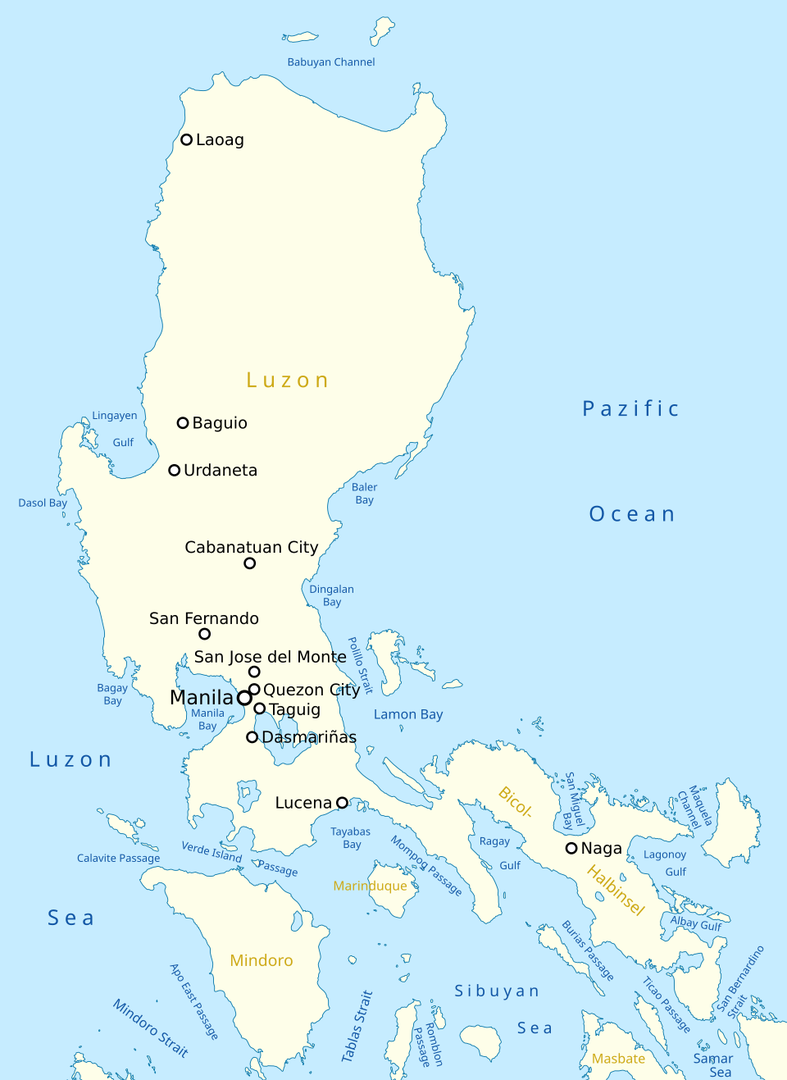
Luzon is the largest island of the Philippines and the sixteenth-largest island in the world. The island of Luzon has approximately 64.3 million inhabitants (as of 2024), making it the most populous island in the Philippines as well as the fourth-most populous island in the world. The capital region, Metro Manila, is located on Luzon and contributes significantly to its high population figure; the metropolitan area alone has over 15 million inhabitants.
Source Pic: Maximilian Dörrbecker (Chumwa) -own work, using this map by NordNordWest, CC BY-SA 2.5, https://commons.wikimedia.org/w/index.php?curid=29441637
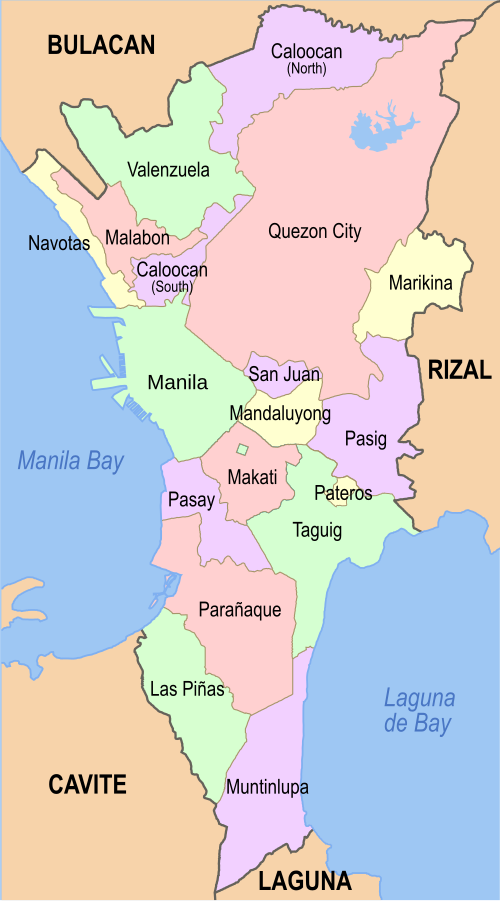
Manila, the capital of the Philippines, is a densely populated city. It is situated on a bay on the island of Luzon. Manila itself is just one city within the Manila metropolitan area, yet it lends its name to this entire urban agglomeration.
The Manila Metropolitan Area—officially known as the National Capital Region (NCR)—serves as the capital region of the Philippines. It encompasses the City of Manila, along with 15 other cities and the municipality of Pateros. The city is surrounded by the various cities and municipalities of the Metro Manila region: Navotas, Caloocan, Malabon, and Valenzuela to the north; Quezon and Marikina to the northeast; San Juan, Pasig, and Mandaluyong to the east; Makati and Pateros to the southeast; and Pasay, Taguig, and Parañaque to the south. Quezon is the largest, most populous (with approximately 3 million inhabitants), and wealthiest city within the greater Metro Manila area. The Manila metropolitan area constitutes the political, economic, and cultural hub of the Philippines. In everyday parlance, the term "Metro Manila" is frequently used, as it is the designation recognized internationally.
Source Pic: By Philtro - Map, colors and stroke widths derived from File: Metro manila map (1).png, CC BY-SA 3.0, https://commons.wikimedia.org/w/index.php?curid=92411674
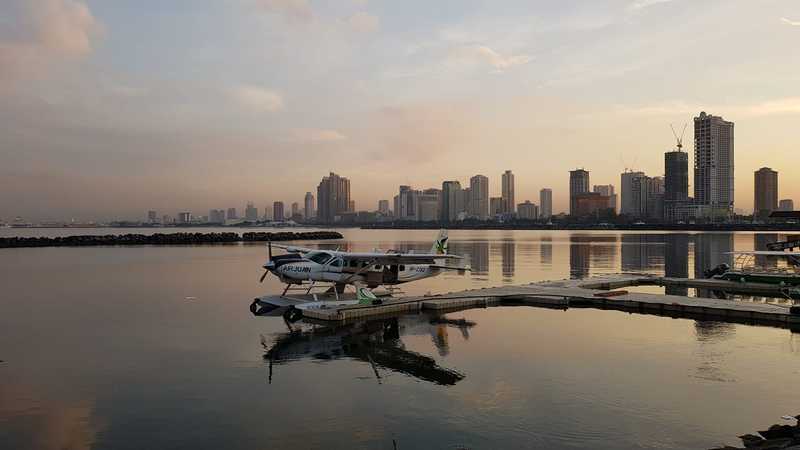
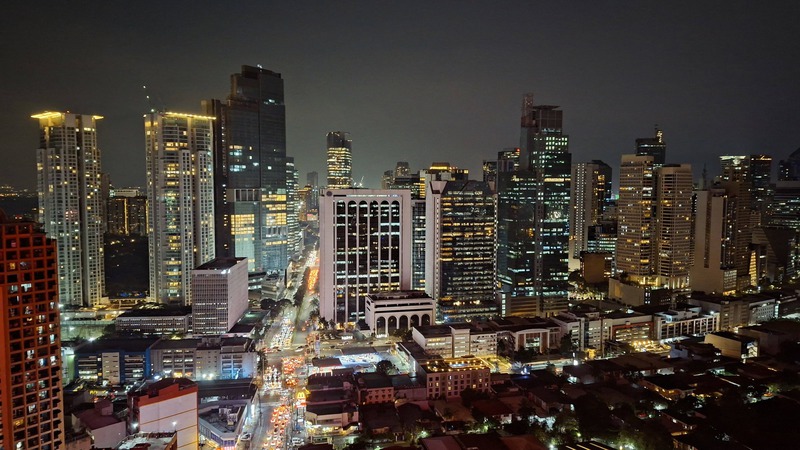
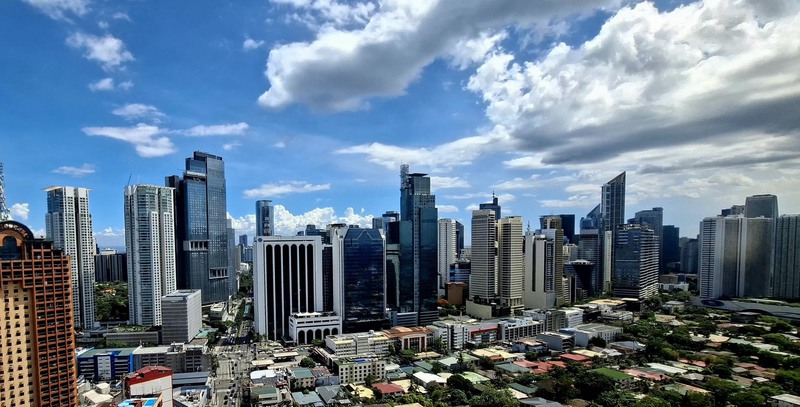
Pictures from Ermita with Manila Bay (Part of Manila) and the City of Makati
Source Pics: own works, H. Rufer
Intramuros is not a separate city, but rather the historic old town of Manila. The name means "within the walls" in Spanish and refers to the fortified city built by the Spanish in the 16th century.
Among the main attractions are:
- Fort Santiago – the historic fortress on the Pasig River.
- San Agustin Church – the oldest surviving stone church in the Philippines and a UNESCO World Heritage Site
- Manila Cathedral – the most important Catholic cathedral in the country.
- The well-preserved city walls and gates, which offer a glimpse into the Spanish colonial era.
Today, Intramuros is one of the most popular tourist destinations in the Philippines, offering museums, historic buildings, restaurants, and guided tours. Many visitors explore the district on foot or by traditional horse-drawn carriage ("kalesa").
Reference: https://en.wikipedia.org/wiki/Luzon, https://en.wikipedia.org/wiki/Metro_Manila, https://en.wikipedia.org/wiki/Manila

 Druckversion
Sitemap
Druckversion
Sitemap
Urheberrechtshinweis 2022-2026 (©), Helmut Rufer, alle Bilder dieser Seite unterliegen urheberrechtlichem Schutz - Copyright notice 2022-2026 (©), Helmut Rufer, all images on this site are protected by copyright. Hintergrund Bild/Background Pic: Paolo Forlani, Public domain, via Wikimedia Commons