
Fish of the Oceans
Fish of the Oceans – Quick Facts
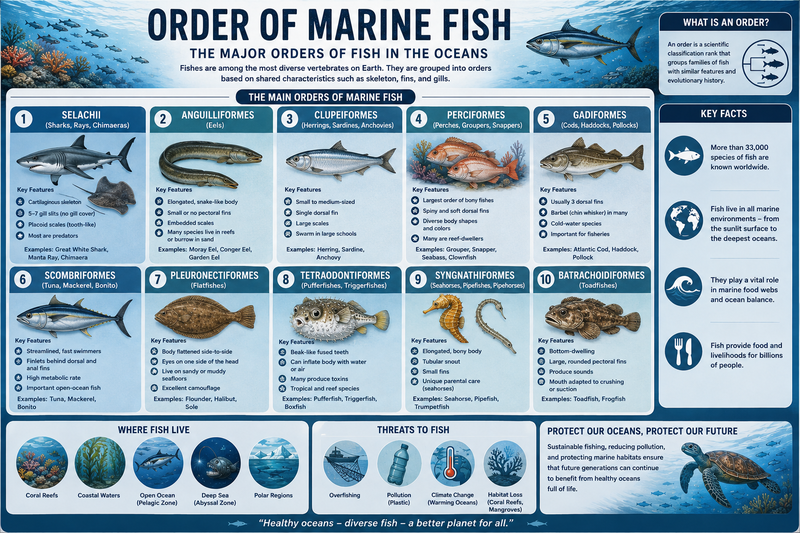
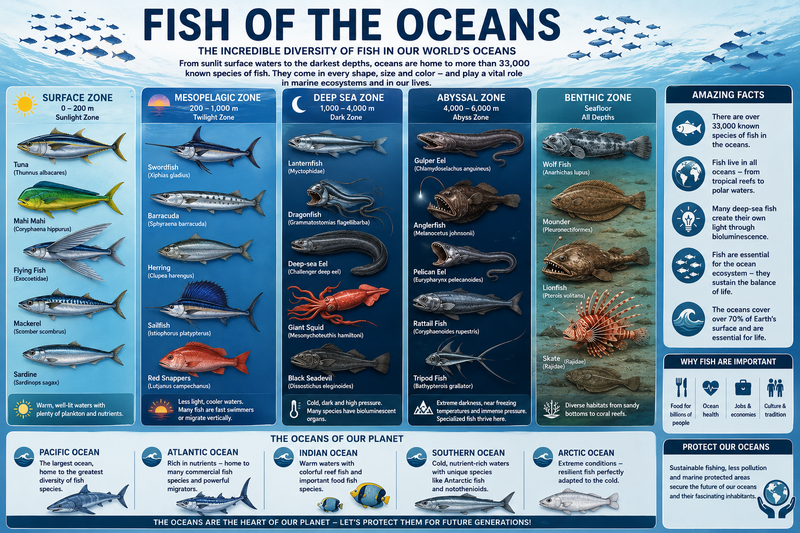
Fish are among the most diverse groups of marine animals. They inhabit coastal waters, coral reefs, the open ocean, the deep sea, and polar regions. Threats: Overfishing, plastic pollution, climate change, and habitat destruction endanger many species. Sustainable fishing and marine conservation are therefore particularly important.
- Species Diversity: More than 33,000 fish species have been scientifically described worldwide.
- Habitats: Fish live in almost every marine environment – from coral reefs and coastal waters to the deep sea and polar regions.
- Size: Their size ranges from tiny species to the whale shark, the largest fish in the world.
- Adaptation: Deep-sea fish are adapted to darkness, high pressure, and low temperatures. Some use bioluminescence to produce light.
- Diet: Depending on the species, fish feed on plankton, algae, invertebrates, or other fish.
- Ecological Importance: Fish are an essential part of marine food webs and help maintain the balance of ocean ecosystems.
- Economic Importance: Fish provide food and income for millions of people worldwide.
- Threats: Overfishing, marine pollution, climate change, and habitat destruction threaten many fish populations.
- Conservation: Sustainable fishing and the protection of coral reefs, mangroves, and other marine habitats are essential for the future of our oceans.
References, own work, graphics based on ChatCPT
 Druckversion
Sitemap
Druckversion
Sitemap
Urheberrechtshinweis 2022-2026 (©), Helmut Rufer, alle Bilder dieser Seite unterliegen urheberrechtlichem Schutz - Copyright notice 2022-2026 (©), Helmut Rufer, all images on this site are protected by copyright. Hintergrund Bild/Background Pic: Paolo Forlani, Public domain, via Wikimedia Commons